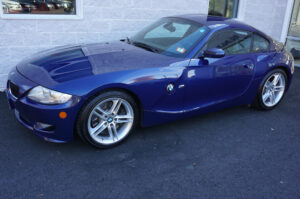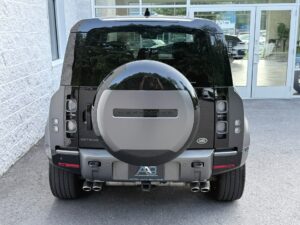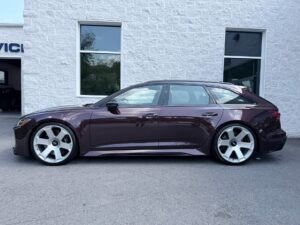
There’s a particular kind of disappointment that comes from finally being ready to buy the muscle car you’ve wanted for years, only to scroll through listing after listing of beat-up, high-mileage examples with cloudy histories and tired suspensions. If you live around Burlington, MA, and you’ve been hunting for a low-mileage muscle car that still feels factory-fresh, the search radius matters as much as the search filters. At Acton Auto Boutique, just a short drive up Route 2A from Burlington, the inventory is curated specifically for buyers who refuse to settle on condition, mileage, or originality.
This guide walks you through what’s typically available, how the major muscle car nameplates compare against each other in real-world terms, and what makes a low-mileage example genuinely worth chasing versus one that just looks good in photos.
Why “Low Mileage” Actually Matters with Muscle Cars
Muscle cars live a different life than commuter sedans. A 90,000-mile Honda Civic has usually been driven gently to work and back. A 90,000-mile Hellcat? That odometer reading hides a very different story, often involving track days, hard launches, and aggressive throttle inputs that wear engines, clutches, differentials, and tires far faster than normal driving ever would.
Buying a low-mileage muscle car (generally meaning under 30,000 to 40,000 miles, depending on model year) gives you:
- Mechanical headroom that high-mileage examples simply can’t promise, especially on supercharged variants
- Original drivetrain integrity, with no surprise rebuilds, mismatched parts, or worn-out clutches
- Stronger resale, since collectors increasingly view limited-production muscle cars as appreciating assets
- Insurance and warranty flexibility, as some extended coverage products have mileage caps
Acton Auto Boutique focuses on this segment specifically because the dealership was built around enthusiast-grade inventory rather than volume-driven turnover.
The Muscle Car Landscape Right Now
Here’s a reality worth understanding before you shop. Production of the iconic American muscle trio has shifted dramatically. The Dodge Challenger and gas-powered Charger ended production at the close of 2023. The Chevrolet Camaro wrapped sixth-generation production in early 2024. Only the Ford Mustang remains in continuous production as a traditional V8 muscle car for the 2026 model year.
What does that mean for buyers? Used and low-mileage examples of the discontinued nameplates are no longer being replenished by the factory. Clean, low-mileage Hellcats, Scat Packs, ZL1s, and Camaro SS models are quietly becoming the next generation of collectibles. The window for picking one up at a sensible price is narrower than it was even two years ago.
Comparing the Top Muscle Cars at the Dealership
Below is a head-to-head look at the most commonly available muscle car platforms in the pre-owned space. Spec figures are based on commonly available trims (always confirm exact specs for any specific vehicle in stock).
Dodge Challenger (2015–2023)
The Challenger is the largest of the modern muscle trio, the most comfortable for taller drivers, and the only one offered with all-wheel drive (on V6 SXT and GT trims), which matters considerably for year-round New England use.
- R/T: 5.7L HEMI V8, 375 hp, 410 lb-ft
- R/T Scat Pack: 6.4L HEMI V8, 485 hp, 475 lb-ft
- SRT Hellcat: Supercharged 6.2L V8, 717 hp (rising to 797 hp in Redeye)
- SRT Demon 170: Supercharged 6.2L, 1,025 hp on E85
The case for it: Old-school presence, retro-influenced cabin, unmatched straight-line attitude. The Scat Pack particularly hits the sweet spot for buyers who want serious V8 muscle without the supercharger maintenance considerations.
Chevrolet Camaro (2016–2024, 6th generation)
The Camaro 6th-gen is the most track-capable of the modern muscle cars in stock-trim handling. Its Alpha platform (shared with the Cadillac ATS) gives it sharper steering and tighter body control than its rivals, though rear visibility is famously poor.
- LT 2.0T: 275 hp turbocharged inline-four
- SS: 6.2L LT1 V8, 455 hp, 455 lb-ft
- ZL1: Supercharged 6.2L LT4, 650 hp, 650 lb-ft
The case for it: Sharpest chassis of the three, best lap times on stock rubber, and frequently the most attainable price point on the used market. The SS 1LE package adds magnetic ride dampers and a track-tuned suspension that transforms the car.
Ford Mustang (2015–2023 S550, 2024+ S650)
The Mustang carries the broadest fan base and the deepest aftermarket. It’s also the only nameplate still in production, so parts availability and dealer service support remain strong well into the future.
- EcoBoost: 2.3L turbocharged inline-four, 310 hp (320 hp High Performance Package)
- GT: 5.0L Coyote V8, 460 hp (S550) / 486 hp (S650)
- Mach 1 (2021–2023): 5.0L Coyote, 470 hp
- Shelby GT500 (2020–2022): Supercharged 5.2L V8, 760 hp
The case for it: Balanced everyday usability, fuel economy on EcoBoost trims of up to 32 mpg highway per EPA fuel economy ratings, and the strongest residual values across multiple model years.
Quick Comparison Table
| Model | Top Trim Power | Drivetrain Options | Year-Round MA Suitability |
| Dodge Challenger | 1,025 hp (Demon 170) | RWD or AWD | Excellent with AWD trims |
| Chevrolet Camaro | 650 hp (ZL1) | RWD only | Good with proper winter tires |
| Ford Mustang | 800 hp (GTD) | RWD only | Good with proper winter tires |
What Acton Auto Boutique Brings to the Table
Located at 429 Great Rd in Acton, roughly 20 minutes west of Burlington via Route 2A or I-95 to Route 2, Acton Auto Boutique operates as a curated specialty dealership rather than a high-volume used-car lot. The buyers behind the inventory are enthusiasts themselves, which shapes what ends up on the floor: low-mileage examples, well-optioned trims, clean histories, and vehicles that have been kept rather than thrashed.
A few things that consistently separate the experience here from a typical pre-owned shop:
- On-site service through Acton Autowerks, staffed with factory-trained Master Technicians experienced with both domestic muscle and European performance platforms
- Pre-sale inspection standards that go beyond the typical state safety check, including alignment verification on calibrated equipment and road-force wheel balancing
- Financing relationships with lenders who understand specialty and performance vehicle valuations, which matters because standard auto loan algorithms often misprice low-mileage performance cars
For Burlington-area shoppers, the proximity is genuinely convenient. The drive from Burlington Center to Acton runs about 25 to 30 minutes on a typical weekday, and the Acton showroom sees plenty of customers making the trip from Lexington, Bedford, Concord, Carlisle, and Westford as well.
What to Look For When Inspecting a Used Muscle Car
Even from a reputable dealer, knowing what to check yourself builds confidence. Walk through these on any low-mileage example you’re considering:
- Tire date codes vs. odometer reading. Original tires on a 25,000-mile car aren’t unusual, but tires older than six years should be replaced regardless of tread depth.
- Track or autocross evidence. Look for tow hook threads showing wear, racing harness mounting points, painted brake calipers covering wear marks, and unusual undertray scrapes.
- Service history with VIN match. Carfax or AutoCheck is a starting point, not the finish line. Ask for actual service receipts when available.
- Tune detection. On Hellcats, Mustang GTs, and any forced-induction model, ask whether the ECU has ever been flashed. Aftermarket tunes can void warranty coverage and stress drivetrain components beyond design tolerance.
- Differential and rear suspension wear. Hard launches eat axles and bushings. A test drive that includes a moderate acceleration run reveals a lot.
- Brake condition. Bedded-in performance brakes show distinct wear patterns. Track-abused rotors often show heat checking or warping not always visible without a closer look.
For year-round Massachusetts use, an undercarriage inspection for salt corrosion is essential, particularly on cars that have been registered in the Northeast for multiple winters.
Financing and Ownership Costs to Plan For
Performance cars cost more to own than their MSRP suggests. Before signing, plan for:
- Insurance premiums that can run 30 to 60 percent higher than a comparably-priced sedan, depending on driver age, location, and trim level
- Premium fuel requirements on virtually every V8 muscle car (87-octane regular is not recommended on any of these engines)
- Tire replacement costs of $1,200 to $2,500 per set for high-performance summer rubber, with replacement intervals often under 20,000 miles for spirited drivers
- Annual maintenance, including more frequent fluid changes on supercharged models (typically every 30,000 miles for supercharger oil, every 60,000 miles for differential fluid under spirited use)
The good news? Low-mileage examples typically come with most original-spec consumables still in good shape, meaning your first 12 to 18 months of ownership tend to be the cheapest.
Frequently Asked Questions
Q: Are muscle cars practical for daily driving in Massachusetts winters?
A: Rear-wheel-drive muscle cars require dedicated winter tires for safe Massachusetts winter use. The Challenger SXT and GT with AWD are the only modern muscle cars factory-equipped for snow driving. Most enthusiasts treat their muscle cars as three-season vehicles and use a secondary winter car.
Q: What’s the difference between an SS, R/T, and GT?
A: Each is the V8-equipped mid-tier trim for its respective brand: SS for Chevrolet Camaro (455 hp), R/T for Dodge Challenger (375 hp in 5.7L form), and GT for Ford Mustang (460–486 hp). All three sit below their supercharged halo variants but above the entry-level four and six-cylinder trims.
Q: Should I buy a Hellcat now or wait for prices to drop further?
A: Hellcat prices have stabilized after the production-end announcement, and certain low-mileage variants (Redeye, Jailbreak, Demon 170) are already trending upward in collector valuations. Standard Hellcat prices may soften slightly over the next year, but pristine low-mileage examples are unlikely to depreciate meaningfully from here.
Q: How important is having a manual transmission on a muscle car?
A: Less important than enthusiast forums suggest, performance-wise. Modern 8-speed and 10-speed automatics typically produce quicker quarter-mile times than their manual counterparts. However, manual transmissions hold their value better in the collector market, so resale-conscious buyers often prefer them.
Q: Do I need to pay extra for an extended warranty on a low-mileage muscle car?
A: It depends on the specific vehicle. Naturally aspirated V8s (5.0 Coyote, 6.2 LT1, 6.4 HEMI) have strong long-term reliability records. Supercharged variants (Hellcat, ZL1, GT500) face more potential repair costs, where extended coverage often makes financial sense.
Q: How far is Acton Auto Boutique from Burlington, MA?
A: Approximately 16 miles, with typical drive times of 25 to 35 minutes depending on traffic. The dealership is located at 429 Great Rd in Acton, accessible via Route 2A west from Burlington or Route 2 east from I-495.
Q: Can I trade in my current vehicle toward a muscle car purchase?
A: Yes. Acton Auto Boutique accepts trade-ins and provides valuations based on current market data rather than book values alone, which often results in stronger offers for well-maintained vehicles.
The Bottom Line
A low-mileage muscle car isn’t just a used vehicle with fewer miles on the odometer. It’s a chance to own a piece of an era that, for the Camaro and Challenger nameplates, has officially ended. The combination of remaining mechanical headroom, original specification, and collector trajectory makes the case stronger every quarter that passes. For Burlington-area buyers, the inventory at Acton Auto Boutique consistently reflects what enthusiasts actually want rather than what’s easy to source at auction.
Ready to see what’s on the lot? Browse the current muscle car inventory at Acton Auto Boutique or call to schedule a test drive at 429 Great Rd, Acton, MA.